Start WhatsApp Chat
Substation Grounding & EPR Design using CDEGS | Hands-on Training

Substation Grounding & EPR Design using CDEGS

Master the principles of substation grounding and Earth Potential Rise (EPR) design using CDEGS. Learn how to analyze soil resistivity, model grounding grids, and ensure compliance with safety standards to protect both equipment and personnel.

We maximize practical skills for future-ready engineers

Foundation

Understand the fundamentals of substation grounding, soil resistivity, and safety concepts essential for reliable power system design.

Analysis

Learn to evaluate grounding systems and calculate Earth Potential Rise (EPR) using industry-standard methodologies.

Design

Build efficient grounding grid models using CDEGS, ensuring compliance with IEEE 80 standards and real-world project requirements.

Application

Apply your knowledge through case studies, simulations, and practical scenarios used in modern substation projects.

Why Substation Grounding & EPR Design Matters

In power system studies, the accuracy of grounding design directly impacts safety, equipment protection, and regulatory compliance. Poor grounding and incorrect EPR estimation can lead to:

  • Unsafe touch and step voltages
  • Risk of electric shock hazards
  • Equipment damage due to improper fault current dissipation
  • Non-compliance with IEEE and international safety standards

This program focuses on practical implementation of substation grounding design using CDEGS, helping you understand soil modelling, grid design, and accurate EPR analysis for real-world applications.

5th May 2026

(7:00 PM to 09:00 PM IST)

16 Hours
(Tuesday & Thuesday)

English

Course Curriculum

What You’ll Learn -
Substation Grounding & EPR Design using CDEGS

Session 1: Grounding Engineering Fundamentals & Safety Framework

  • Electric shock mechanisms
  • Touch voltage, step voltage, transfer voltage concepts
  • Overview of IEEE 80 safety criteria
  • Earth Potential Rise (EPR) fundamentals
  • Common grounding design failures in real projects
  • Introduction to CDEGS software environment and modules 

Session 2: Soil Resistivity & Multilayer Modelling (RESAP)

  • Wenner 4-probe method – theory and field practice
  • Soil model equivalence and limitations
  • Importing field data into RESAP
  • Curve fitting and inversion
  • Developing multilayer soil models
  • Sensitivity analysis of soil layers
  • Impact of soil model errors on grounding design 

Session 3: Manual Calculations as per IEEE 80

  • Manual Earthing Conductor sizing calculation.
  • Types of Earthing System
  • Manual Earthing calculation
  • Limitations of manual earthing calculation

Session 4: Substation Earth Grid Modelling (SESCAD)

  • Substation Earth Grid Modelling (SESCAD)
  • Modelling Horizontal Conductors and Rods 
  • Grid Spacing and Burial Depth Considerations
  • Surface Layer Modelling (Rock/Asphalt)
  • Computing Grid Resistance
  • Initial EPR Calculation

Session 5: Touch & Step Voltage Evaluation

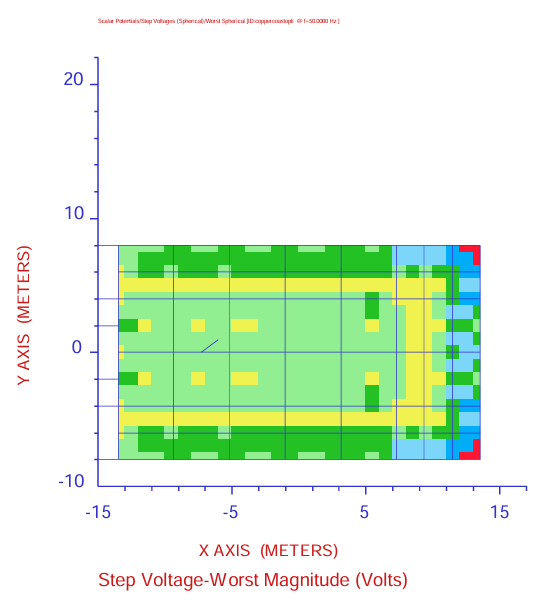
  • Generating touch and step voltage plots
  • Identifying unsafe zones
  • Comparing results against safety criteria
  • Understanding worst-case locations
  • Effect of fault duration and body weight factors 

Session 6: Mitigation Techniques & Design Optimization

  • Increasing conductor density
  • Grid extension methods
  • Adding ground rods
  • Surface layer enhancement

Session 7: Advanced Modelling Topics

  • Electrically large grounding systems
  • Remote earth modelling considerations
  • Introduction to AC interference concepts
  • Introduction to split factors

Session 8: Case Study & Professional Reporting

  • Complete substation grounding case study
  • Review of model inputs and assumptions
  • Preparing a professional grounding design report
  • Common audit mistakes
  • Checklist for regulatory submission
  • Q&A
  • Introduction to Full Certification Program 

Practical substation grounding & EPR design using CDEGS

Gain hands-on expertise in designing safe and reliable substation grounding systems using CDEGS. This program helps you understand soil resistivity analysis, grounding grid design, and accurate Earth Potential Rise (EPR) calculations to ensure system safety and compliance with industry standards.

Soil Modelling

Learn how to analyze and interpret soil resistivity data for accurate grounding system design and performance evaluation.

Grounding Design

Develop practical skills to design efficient grounding grids that meet IEEE safety standards and real-world requirements.

EPR Analysis

Understand and calculate Earth Potential Rise (EPR) to minimize risks and ensure personnel and equipment safety.

What You Will Learn

  • Understanding soil resistivity measurement and interpretation using CDEGS
  • Designing safe and optimized substation grounding grids
  • Calculation and analysis of Earth Potential Rise (EPR)
  • Evaluation of step and touch voltages for personnel safety
  • Criteria for grounding design as per IEEE standards
  • Interpretation of simulation results for real-world grounding scenarios

One Time Deal

25000 INR
    • Live modelling
    • Instructor-led modelling
    • Step-by-step build
    • Real-case workflow
    • Certificate
Buy Now

If we haven’t met yet…

Hi, I am Selva, gold medalist in Power System engineering from Anna university, Chennai, Tamil Nadu

I have 18 years of invaluable experience in the power industry. Throughout my career, I've had the privilege of working with renowned organizations like PRDC, Tata Consulting Engineers Limited, and ABB, where I honed my expertise in power system studies and analysis. Currently, I proudly serve as the Business Head in Power Projects, leveraging my extensive knowledge to drive excellence in this field.

Er. Selvakumar S

Business head - PowerProjects

Frequently Asked Questions (FAQ)

Live session with lifetime access to the recording.

Yes, You'II receive a certificate of Completion

Yes, You'II be added to a private support group.

This course is ideal for electrical engineers, power system professionals, consultants, and students who want to gain practical knowledge in substation grounding and EPR design using CDEGS.

No prior experience is required. The course starts with the basics and gradually moves to advanced concepts, making it suitable for both beginners and experienced professionals.

Recording availability will be communicated to registered participants.

You will learn soil resistivity analysis, grounding grid design, Earth Potential Rise (EPR) calculation, step and touch voltage evaluation, and how to use CDEGS for real-world applications.

You will need access to CDEGS software. Guidance on installation or trial access may be provided during the course.